
669 views
Dakar Digest #6: Off and Jumping in Dakar!
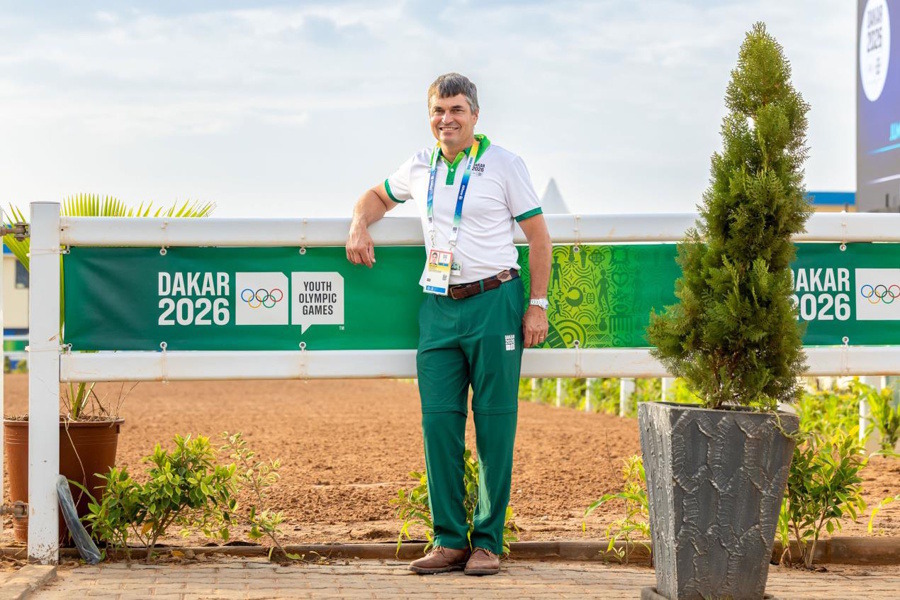
Gérard Lachat, the Swiss FEI Course Designer, at the Dakar 2026 Equestrian Centre in Diamniadio (SEN). © FEI / Kirsty Pasto
03.11.2026
Greetings from Dakar, where the Jumping competition got off to an exciting start at the Equestrian Centre in Diamniadio (SEN)!
The first full morning brought plenty of energy, great sport and four clear rounds. Read all about the action in Kirsty Pasto’s sports report here.
In the mixed zone, athletes described the course as technical but enjoyable. As Liza Tittle (USA) put it: “I think there were just enough challenges to make it a good technical course, but still making it fair enough to get everybody acclimated to day one.”
That’s certainly a feather in the cap of the quiet and unassuming Gérard Lachat. The experienced Swiss FEI Course Designer has worked at some of the sport's biggest events, including the Longines FEI Jumping World Cup™ Final in Basel (SUI).
But what goes into designing a course for an event where athletes and horses are meeting for the first time?
I caught up with Gérard this week to explore the thinking, preparation and teamwork behind the courses at Dakar 2026.
A different kind of competition
“What makes the Youth Olympic Games special is that all the riders are meeting their horses for the first time. That's something we need to consider when designing the courses,” Gérard explains.
With riders of varying experience, his aim is to challenge the strongest combinations while giving everyone a fair opportunity to perform.
The courses therefore follow a gradual progression, allowing athletes and horses to get to know one another as the week of familiarisation, training and competition unfolds.
“We look at how the horses jump, how the riders feel with them and how everything develops. Then we adapt the distances and heights accordingly throughout the week.”
Although the course plans are prepared in advance, the design process continues throughout the competition. Gérard works closely with fellow course designers Fredrik Malm (Sweden) and Nazim Sebiane (Algeria), adapting the courses as the week progresses.
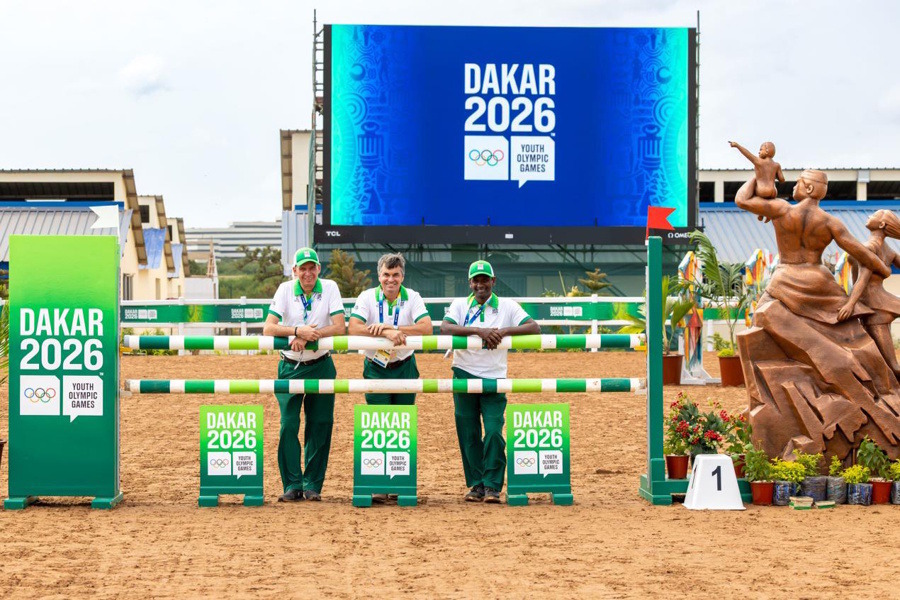
Left to right: Nazim Sebiane (ALG), Gérard Lachat (SUI) and Fredrik Malm (SWE) (© FEI / Kirsty Pasto)
The team carefully observes each session and makes adjustments where necessary. The obstacle heights will gradually increase towards the regulated maximum of 125 cm, with the technical demands building as the week goes on.
Finding the right balance
This gradual progression is key to striking the right balance between sporting challenge and fairness.
“We have to create something challenging enough for the best riders, but at the same time make sure that the less experienced combinations can complete the course. We want to create good sport and give the riders the opportunity to perform,” Gérard explains.
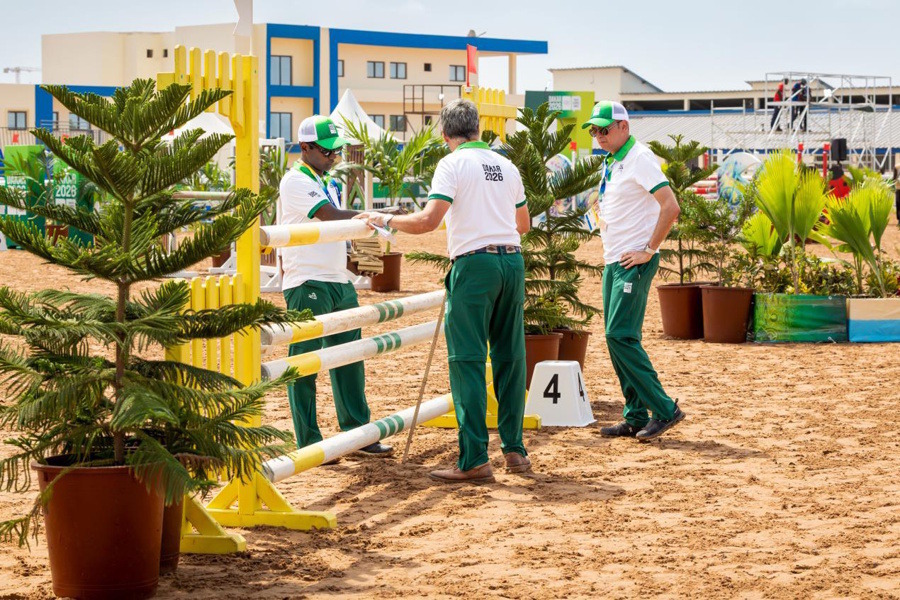
The Equestrian course design team at Dakar 2026. (© FEI / Kirsty Pasto)
The progressive programme also has horse welfare in mind, helping to manage the horses' efforts and keep them fresh for the final days of competition.
That consideration extends to the obstacles themselves. Another deliberate choice has been to keep them relatively consistent in colour and appearance, helping the horses become comfortable with their surroundings.
“Our aim is to create courses that allow the horses to feel comfortable and confident, while testing the riders' skill, judgement and ability to find the right lines. We want the focus to be on the quality of the riding and the decisions made around the course.”
A rider's perspective
Alongside his experience as a course designer, Gérard also draws on his time in the saddle. Having competed over courses up to 140–145 cm, he understands first-hand how a track feels from the rider's perspective.
“When I design a course, I often imagine myself riding it. If I look at a turn and think that, as a rider, I wouldn't be happy with it, then I won't build it that way.”
Ultimately, good course design is about bringing all these elements together: creating a logical, harmonious track that is fair to the horses, tests the riders and makes for exciting sport.
Don’t forget you can watch the competition on Thursday 5 November here: Dakar 2026 Live Stream. Find out more about coverage where you live here.
The Dakar 2026 Youth Olympic Games run from 31 October to 13 November, with Equestrian taking place from 3 to 6 November.
 EquiMall. One app. A village of equestrian shops.

Hoofpick


0 Comments